

François-Gabriel Becq
Landscape Architect/Gardener, Art Historian, Artistic Director
Linked In

Architecture and Botany
First steps in life were taken in Douala, Cameroon, where I discovered the richness of African contrasts, an experience that awakened in me a sensitivity to flora, fauna, scents, textures, and light. Returning to France in 1998, this nostalgia became the guiding thread of my aesthetic and sensory quest. In 2006, I left for Syria, discovering Damascus and its splendors, before Dubai became, from 2011 onward, the setting for eight years of immersion in the Arabian Peninsula. This knowledge of the Arab world is further developed academically through the history of art.
In 2012, I enrolled at École du Louvre , specializing in Islamic Art and Western Architecture. Then in 2017, I earned a master's degree from Le Potager du Roi, École Supérieure du Paysage at Versailles, where I honed the skills and vocabulary of my vocation. My training continued under the tutelage of masters: Louis Benech introduced me to the art of gardens, while Olivier Riols, at Capsel Paysage, allowed me to put the gardener's craft into practice. From 2021 to 2023, I collaborated with Belgian landscape architect François Goffinet on iconic projects, such as the Notre-Dame de Saint-Remy Abbey in Rochefort and the park of a royal palace in Bahrain.
Since 2021, I have also worked closely with Ateliers Jean Nouvel, contributing to projects in Saudi Arabia, China, Singapore, and France.
Joining the International Dendrology Society (IDS) has been a plunge into the mysterious world of botany. In 2024, a botanical study trip took us to Bahrain and then Saudi Arabia, where I wrote the travel report and a study on the flora of these regions for the IDS.
Architecture and botany are constantly intertwined, much to my delight.
Gaëtan de Briey
Business Developer &
Forest Garden Designer
Linked In
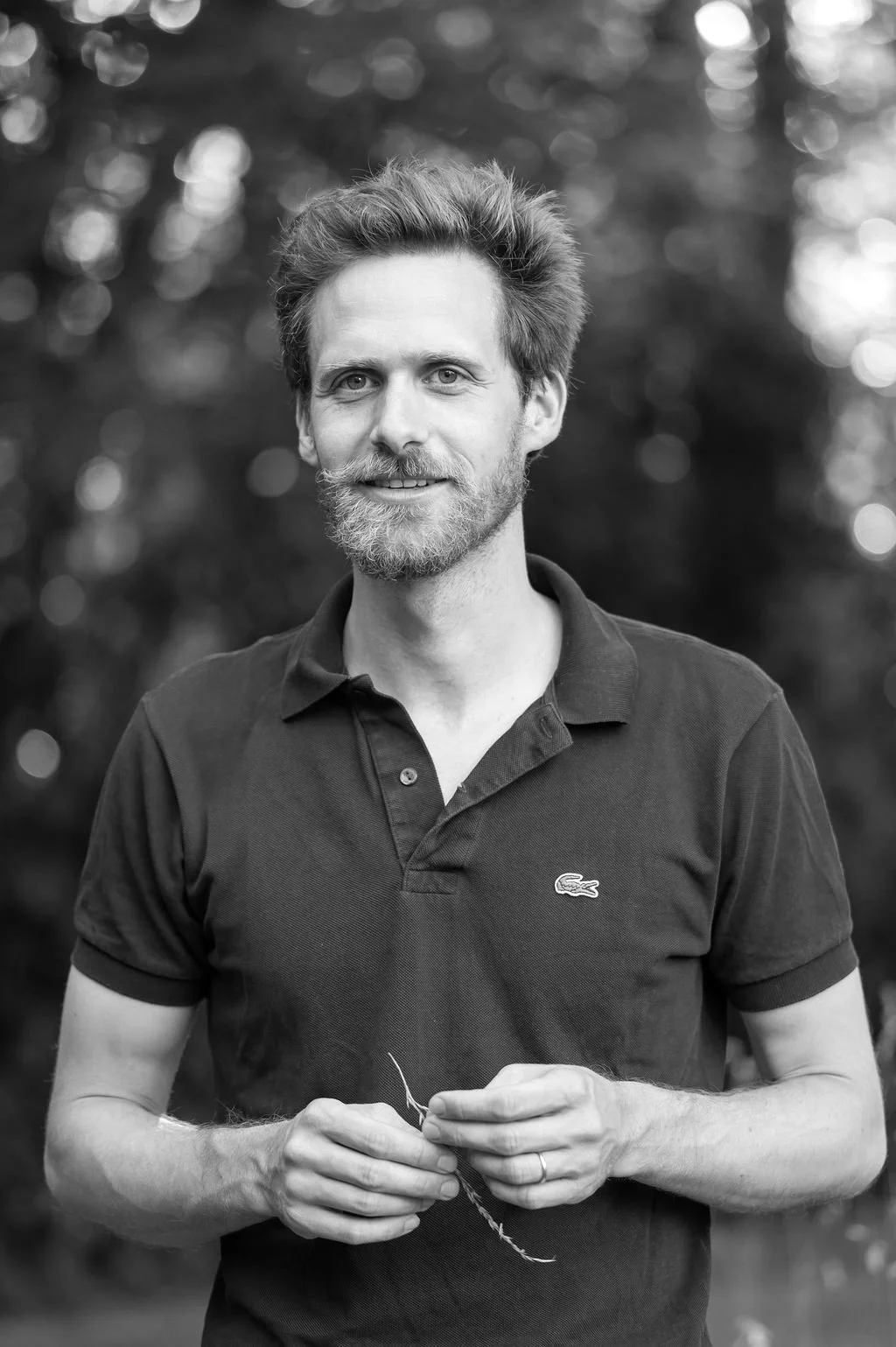
The Art of Ecological Gardens
My professional career has mainly been shaped by companies whose mission was the sustainable management of forest and agricultural ecosystems. I learned a great deal during my time at Soil Capital, which opened my eyes to the importance of agroecological transition and improving soil health for environmental and economic purposes.
Decades of intensive farming practices have depleted the soil and weakened the resilience of land and supply chains, not to mention the profitability of farms. It was through working alongside many farmers and foresters that I realised the urgent need to cultivate diversity by working with, rather than against, nature dynamics. This not only regenerates degraded land, but also increases resilience to extreme weather events, which are becoming increasingly frequent and intense.
The principles of the circular economy and agroecology fascinate and inspire me. Waste is transformed into a resource, we think cyclically rather than linearly, we regenerate living ecosystems instead of degrading them.
Trained in the design of forest gardens, also known as edible forests, I love the idea of creating spaces that nourish and replenish not only their inhabitants (micro and macro fauna) but also humans.